×
.jpg)
Pharmaffiliates recognize that drug safety begins with understanding what lies beyond the active ingredient. The identification, isolation, and characterization of impurities play a vital role in evaluating the biological safety of every pharmaceutical product.
Driven by this responsibility, Pharmaffiliates offers one of the largest collections of impurity reference standards, featuring over 10,000 in-stock impurities and a catalog of 300,000+ compounds to support pharmaceutical research and manufacturing.
Our team of experienced scientists specializes in synthesizing impurities and metabolites of APIs and FPPs, covering a wide range of therapeutic categories, including antibiotics, steroids, chiral and achiral molecules, and deuterated compounds.
Pharmaffiliates delivers trusted expertise and reliable reference materials to support your impurity profiling needs, whether for regulatory submission, method development, or routine quality control.
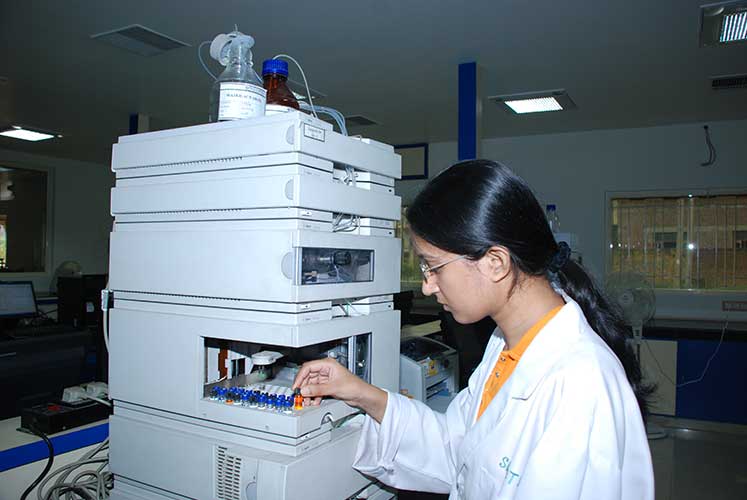
We design targeted, high-sensitivity analytical strategies using LC–MS/MS, HRMS, and advanced NMR techniques to detect, trend, and control impurities even below ICH reporting thresholds. This proactive approach is especially valuable when future scale-up, lifecycle management, or regulatory scrutiny is anticipated...read more
Yes. We routinely support deficiency responses, regulatory queries, and post-approval changes by re-evaluating impurity profiles, confirming impurity identity, and generating supportive analytical and structural data within compressed timelines.
We apply root-cause impurity mapping by correlating synthetic steps, reaction intermediates, forced degradation studies, and stability data. Advanced NMR interpretation further supports differentiation between process-origin impurities and degradation products.
We follow a structured, stepwise workflow:
Yes. We have proven experience with high-potency APIs, heterocyclic compounds, fluorinated molecules, chiral systems, and complex chemistries, supported by controlled handling facilities, ultra-sensitive detection, and orthogonal analytical tools including advanced NMR.
Yes. We perform batch-to-batch impurity trend analysis to demonstrate process consistency, support comparability studies, and strengthen regulatory filings such as ANDA, DMF, and global submissions.
Our impurity profiling data is translated into a QbD-aligned control strategy, linking:
This approach supports robust regulatory documentation and lifecycle management.
Absolutely. We support route changes, scale-up activities, and vendor changes by demonstrating impurity equivalence or improvement through comparative impurity profiling supported by analytical and NMR-based structural evidence.
We deliver submission-ready documentation, including:
We integrate risk assessment, TTC-based evaluation, in silico alerts, and ultra-trace quantification into impurity profiling programs to proactively mitigate GTI-related regulatory risk.
Yes. Our teams are structured for parallel analytical execution, enabling rapid impurity identification, structural confirmation, and reporting to meet urgent development or regulatory milestones.
Yes. We support impurity qualification strategies using structural similarity arguments, literature justification, NMR-based confirmation, and analytical data generation, helping clients avoid unnecessary toxicology studies.
We develop selective and orthogonal analytical methods, supported by advanced NMR where required, to ensure accurate impurity resolution and identification in complex, multi-component formulations without analytical interference.