
Pharmaceutical Reference Standards & Impurities for QC & R&D
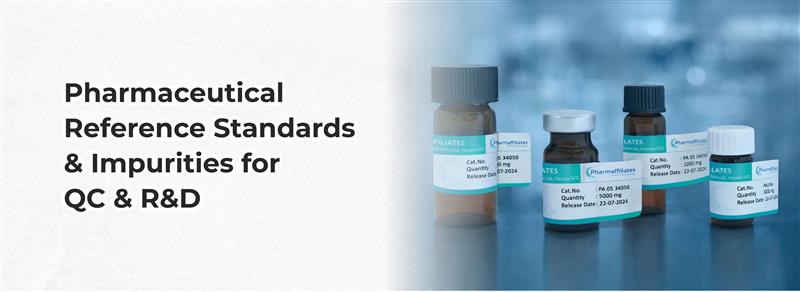
High-purity pharmaceutical reference standards, intermediates, and impurity compounds are essential for ensuring accuracy in synthesis, reliability in analytical testing, and compliance with global regulatory standards. CAS-based chemicals such as Cyclopropanecarboxamide, 4-(2-Chloroethyl)morpholine HCl, Ceftazidime Impurity F, and NDesmethylpheniramine Maleate provide laboratories with reproducible results, precise impurity profiling, and validated workflows in pharmaceutical R&D and quality control.
The Importance of High-Purity Reference Standards in Pharmaceutical Research
Pharmaceutical laboratories operate under strict regulatory requirements from authorities such as USFDA, EMA, and ICH. Accurate analytical testing, method validation, and drug development rely on high-purity, structurally verified compounds.
Using well-characterized reference standards, intermediates, and impurities reduces variability, improves reproducibility, and ensures regulatory compliance across R&D and QC workflows.
Cyclopropanecarboxamide (CAS 6228735)
Cyclopropanecarboxamide is an intermediate used in pharmaceutical synthesis and analytical studies. Its structure supports reaction pathway optimization, coupling reactions, and heterocyclic synthesis.
Pharmaffiliates provides high-purity, fully documented material, giving researchers confidence in reproducibility and method development.
4-(2Chloroethyl)morpholine Hydrochloride (CAS 3647696)
This morpholine derivative is a specialized intermediate used in medicinal chemistry and synthetic workflows. Its functional groups enable substitution and condensation reactions, making it valuable for both API development and laboratory studies.
High-purity reference-grade material ensures analytical accuracy and regulatory compliance, distinguishing it from standard industrial reagents.
Ceftazidime Pentahydrate Impurity F – Sulfur Trioxide (CAS 26412873)
Ceftazidime Impurity F is a specified impurity used in quality control of antibiotics. Laboratories use it for HPLC, LC-MS, and other analytical methods to detect trace-level impurities and ensure that APIs meet regulatory safety and purity standards.
Pharmaffiliates’ supply includes full analytical documentation including COA, HPLC chromatograms, and traceability data.
NDesmethylpheniramine Maleate (CAS PAI16017002)
NDesmethylpheniramine Maleate is a pharmaceutical derivative used in analytical method validation and impurity profiling for antihistaminic agents.
Pharmaffiliates provides high-purity material with complete structural confirmation, making it ideal for QC laboratories and R&D teams.
The Role of Analytical Documentation
Researchers and QC teams prefer fully documented reference standards. Pharmaffiliates provides:
- Certificates of Analysis (COA)
- NMR and MS spectra
- Chromatographic purity data
- Batch traceability
This ensures reproducibility, regulatory compliance, and scientific accuracy in pharmaceutical research.
FAQ
Q1: What is Cyclopropanecarboxamide used for in pharmaceutical research?
A: Cyclopropanecarboxamide is an intermediate used in synthetic chemistry and analytical workflows. It supports reaction optimization and heterocyclic synthesis in pharmaceutical R&D.
Q2: Why is 4-(2-Chloroethyl)morpholine Hydrochloride important?
A: This morpholine derivative is used as a reference-grade intermediate for substitution and condensation reactions in API development and laboratory research.
Q3: How is Ceftazidime Impurity F used in QC labs?
A: It is used for impurity profiling in antibiotics via HPLC and LC-MS, ensuring APIs meet safety and purity standards.
Q4: What is the application of N-Desmethylpheniramine Maleate?
A: It is used in analytical method validation and impurity profiling for antihistaminic agents, supporting reproducible R&D workflows.
Q5: Why are CAS numbers important for reference standards?
A: CAS numbers uniquely identify chemicals, enabling precise cataloging, searchability, and tracking of pharmaceutical intermediates and impurity standards.
Q6: How do high-purity intermediates improve reproducibility?
A: High-purity materials reduce variability in reactions and analytical results, ensuring consistent outcomes in pharmaceutical research.


Leave a Reply