
Precision Custom Synthesis in CROs for Impurity Standards and Regulatory Compliance
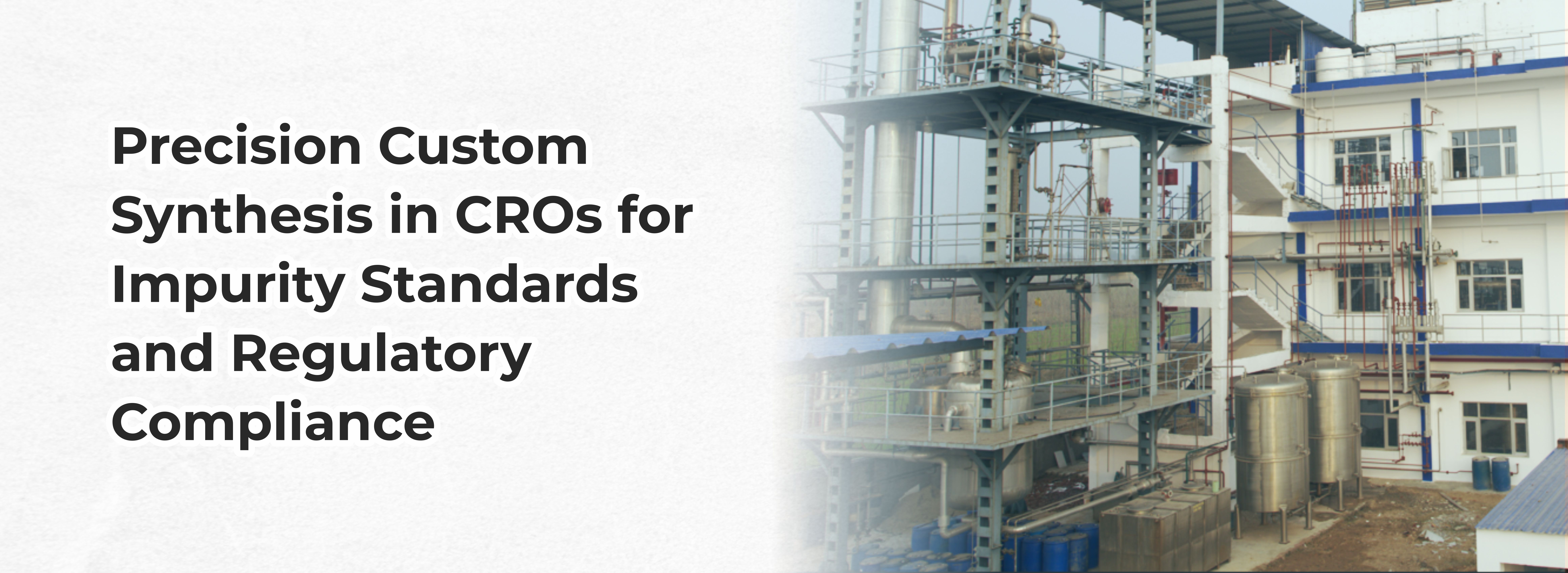
Precision Custom Synthesis in CROs for Impurity Standards and Regulatory Compliance
In regulated pharmaceutical development, precision is not optional. Every impurity, metabolite, or degradation product must be accurately identified, synthesized, and supported with validated analytical data. Regulatory agencies in the US and EU increasingly expect scientific rigor, traceability, and reproducibility when reviewing impurity profiles in drug submissions.
Custom synthesis performed by specialized Contract Research Organizations plays a critical role in meeting these expectations. When reference materials are unavailable or insufficient, CRO-led custom synthesis ensures impurity standards are fit for purpose and compliant with global regulatory requirements.
The Growing Importance of Precision in Pharmaceutical Impurity Analysis
Regulatory scrutiny around impurity control continues to intensify across global markets. Agencies now require detailed impurity characterization to demonstrate product safety, stability, and consistency throughout the drug lifecycle.
Even trace-level impurities can influence approval outcomes if they are poorly characterized or inadequately supported by analytical evidence. As a result, pharmaceutical companies increasingly rely on precision-driven custom synthesis to address regulatory queries, method validation needs, and stability assessments with confidence.
Why Custom Synthesis Is Essential in Regulated Pharma Development
Commercially available reference standards often fail to meet the needs of modern drug development. Novel formulations, process changes, and stress testing can generate impurities that are not catalogued or readily available.
Custom synthesis becomes essential when companies must address unknown degradation products, process-related impurities, or metabolites that emerge during development or post-approval changes. These synthesized compounds enable accurate quantitation, method validation, and toxicological evaluation, all of which are required for regulatory acceptance.
What Custom Synthesis Means in a CRO Environment
Definition and Scope of CRO-Led Custom Synthesis
Custom synthesis in a CRO setting involves the design and laboratory-scale production of chemically defined compounds tailored to specific regulatory or analytical requirements. These compounds are developed with controlled purity, reproducibility, and full traceability to support regulated applications.
Unlike academic synthesis, CRO-led work is driven by submission readiness, documentation quality, and regulatory compliance.
Compounds Commonly Developed Through Custom Synthesis
Pharmaceutical CROs routinely synthesize a wide range of compounds, including process-related impurities, degradation products formed under stress conditions, drug metabolites and reaction intermediates, isotopically labelled compounds, and stable isotope reference standards.
Each compound must meet defined specifications for purity, identity, and stability to be suitable for regulatory use.
Regulatory Expectations for Impurity Standards
Role of Impurity Standards in Method Validation
Regulatory authorities require impurity standards to establish specificity, accuracy, linearity, and sensitivity in analytical methods. Without well-characterized reference materials, impurity quantitation lacks reliability and may raise regulatory concerns.
Synthesized standards allow analytical teams to validate methods with confidence and demonstrate control over impurity profiles across batches.
Documentation Required for Regulatory Submissions
Impurity standards must be supported by comprehensive documentation. This typically includes certificates of analysis, spectral data such as NMR and mass spectrometry, chromatographic purity profiles, and supporting safety documentation.
Compliance with ICH Q3A, Q3B, Q1A, and related guidelines is essential to ensure acceptance across US and EU regulatory frameworks.
How Pharmaffiliates Delivers Precision Custom Synthesis
Scientific and Technical Capabilities
Pharmaffiliates operates GMP-compliant synthesis laboratories equipped to handle milligram to multi-gram scale custom synthesis. Each project follows a controlled workflow designed to ensure reproducibility, purity, and regulatory suitability.
Our scientists apply route scouting, process optimization, and isolation strategies to deliver compounds that meet defined analytical and regulatory criteria.
Analytical and Documentation Support
Structural confirmation and purity assessment are performed using validated analytical techniques, including NMR, HPLC, LC-MS and FTIR. Each synthesized compound is delivered with a complete analytical data package suitable for submission and audit review.
Support Across the Drug Development Lifecycle
Pharmaffiliates supports pharmaceutical clients across multiple development stages. This includes impurity standards for ANDA and DMF submissions, reference materials for stability and toxicology studies, and bioanalytical standards for BE and BA studies.
Long-term supply options are also available to support commercial and lifecycle management needs.
Case Example Supporting an ANDA Submission Through Custom Impurity Synthesis
A US-based pharmaceutical company preparing an ANDA required custom synthesis of a process-related impurity that was not commercially available. The submission demanded structural confirmation, validated analytical data, and stability support.
Pharmaffiliates developed the impurity standard, provided full characterization including NMR, HPLC, LC-MS, and certificate of analysis, and generated stability data aligned with ICH guidelines. The reference standard was successfully integrated into the client’s analytical and regulatory submission workflow.
Choosing a CRO for Custom Synthesis and Impurity Standards
Selecting the right CRO requires more than synthesis capability alone. Regulatory understanding, analytical expertise, data integrity, and confidentiality are equally important.
A reliable CRO should demonstrate proven experience with regulated submissions, transparent documentation practices, and the ability to collaborate effectively with analytical, formulation, and regulatory teams.
Conclusion
Precision custom synthesis is a regulatory necessity in modern pharmaceutical development. As impurity profiles become more complex and regulatory expectations continue to evolve, CRO-led custom synthesis provides the scientific foundation required for compliance and submission success.
By combining technical expertise with regulatory awareness, Pharmaffiliates delivers impurity and metabolite standards that support confident decision-making and global regulatory acceptance.
Frequently Asked Questions
What is custom synthesis in a pharmaceutical CRO
Custom synthesis refers to the controlled development of specific compounds, such as impurities or metabolites, that are required for regulated analytical or submission purposes.
Why are impurity standards critical for regulatory filings
They enable accurate method validation, impurity quantitation, and safety evaluation, all of which are required by regulatory authorities.
How is quality ensured in custom synthesis projects
Quality is ensured through GMP-compliant synthesis, validated analytical characterization, and complete regulatory documentation.
Can isotope-labelled compounds be synthesized
Yes. CROs like Pharmaffiliates offer isotope-labelled compound synthesis for pharmacokinetic and metabolite studies.


Leave a Reply